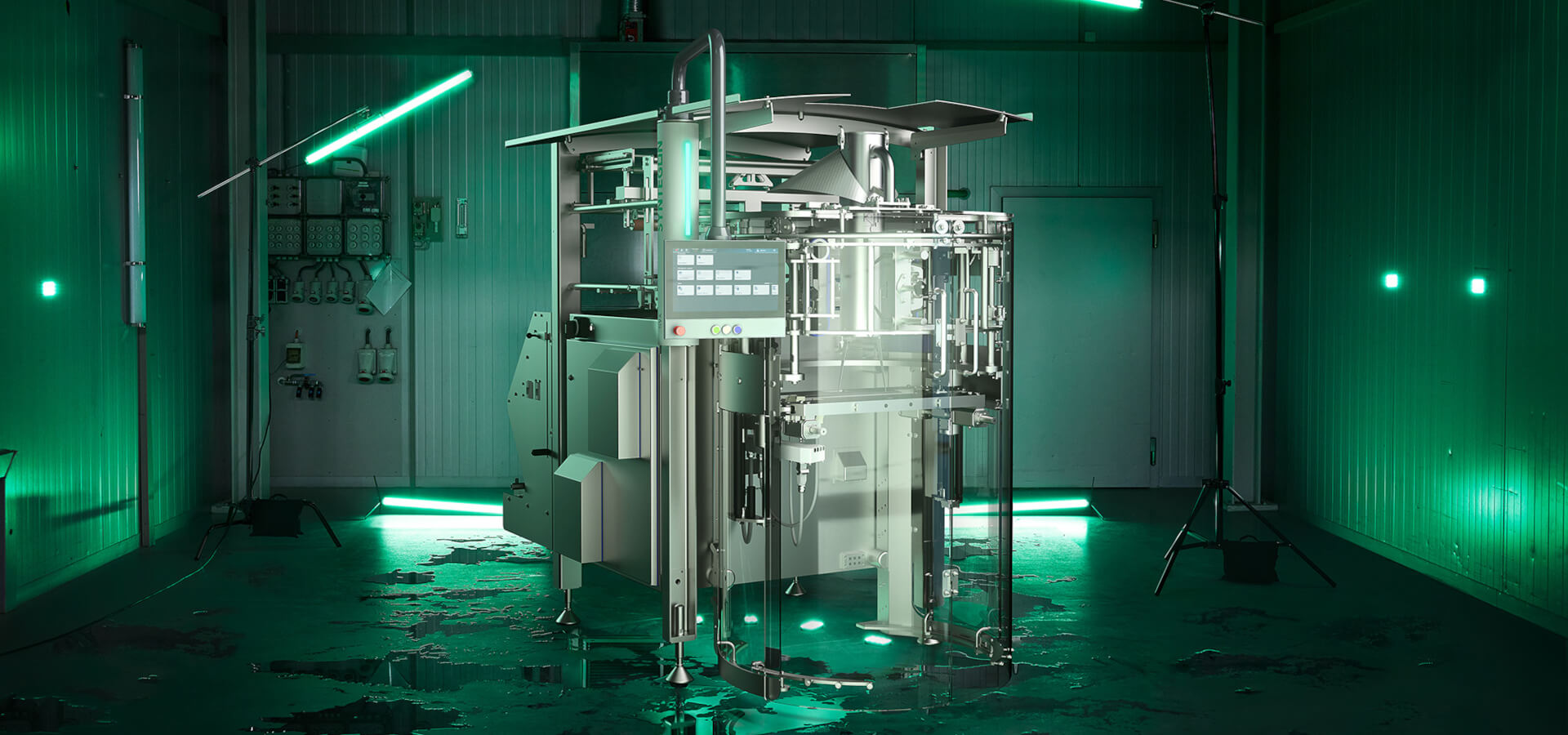
Last updated: July 17, 2026. A VFFS machine forms a bag around a vertical tube and lets the product fall into it. An HFFS machine carries the pack horizontally past forming, filling and sealing stations. Nearly every practical difference between the two — footprint, film cost, feasible pack styles, gentleness of handling — follows from that one geometric fact.
Return to the Packaging Machinery topic for the wider equipment-selection path.
VFFS vs HFFS: the practical differences
| Factor | VFFS | HFFS |
|---|---|---|
| Machine footprint | Compact and tall; the forming tube works vertically. | Longer and lower; needs more floor length. |
| Packaging material | Runs rollstock film, usually the lowest material cost per pack. | Often runs premade pouches: higher material cost, stronger shelf presentation. |
| Product suitability | Free-flowing products that tolerate a vertical drop — granules, powders, snacks, frozen pieces. | Products needing gentle or oriented handling — fragile, sticky, flat or irregular items. |
| Typical pack styles | Pillow bags, gusseted bags, stick packs, sachets. | Stand-up and shaped pouches, zipper and spout formats, flow-wrap styles. |
| Equipment cost | Generally the lower-cost route to a given output for suitable products. | Generally higher for comparable output; the premium buys format flexibility. |
Treat the table as a filter, then verify the surviving option with a witnessed trial on your product and film — individual machines vary widely around these starting positions.
The decision path
- Can the product free-fall? If it bridges, smears, breaks or clouds with dust inside a forming tube, VFFS is fighting physics. Look horizontal.
- Does the pack sell the product? Zippers, spouts, shaped pouches and premium stand-up presentation favour HFFS or premade-pouch machines.
- Is floor space the constraint? A VFFS tower fits where a horizontal wrapper will not.
- How many SKUs share the line? Compare change parts, recipe management and demonstrated changeover times on both architectures — a fast changeover that operators cannot repeat safely is not fast.
- Still tied? Price the film. The difference between rollstock and premade pouches, multiplied over a few years of material purchasing, can outweigh the machine-price difference entirely.
Validate the survivor with a witnessed trial
Give each shortlisted supplier the same brief: product samples, packaging film, SKU list, target output, utilities and footprint. Then watch the machine run startup, steady state, a planned format change and fault recovery. A machine-only demonstration can conceal upstream instability that limits usable output, so ask the supplier to show the whole system boundary — dosing, film handling, coding, rejection and discharge. Put the acceptance criteria in writing before the order.
Related equipment and buying guidance
Hayssen VFFS Packaging Machine is linked as a product card for teams researching a VFFS equipment profile. Types of Packaging Machines gives the broader equipment taxonomy. The Packaging Machine Buying Guide turns this comparison into a comparable RFQ and acceptance plan, and the Packaging Machine Maintenance Checklist helps define spares and support requirements before purchase.
Sources
Title: Learn About VFFS and HFFS Packaging Machines — Smart Weigh · VFFS vs HFFS — Tecnimodern
URL: https://www.smartweighpack.com/learn-about-vffs-packaging-machines-and-hffs-packaging-machines.html
Smart Weigh: "VFFS packaging machines use a vertical approach to form, fill, and seal bags or pouches, while HFFS packaging machines use a horizontal approach to do the same".
Frequently asked questions
Is VFFS cheaper than HFFS?
Usually, for products that tolerate vertical filling: the machine is mechanically simpler and rollstock film costs less per pack than premade pouches. The gap narrows or reverses once the product needs handling or pack formats that only a horizontal machine provides.
Can one machine run both VFFS and HFFS formats?
No — the two architectures are mechanically different machines. What a supplier can offer is one platform covering several formats within its own architecture; ask which formats are supported with change parts and how performance is verified for each.