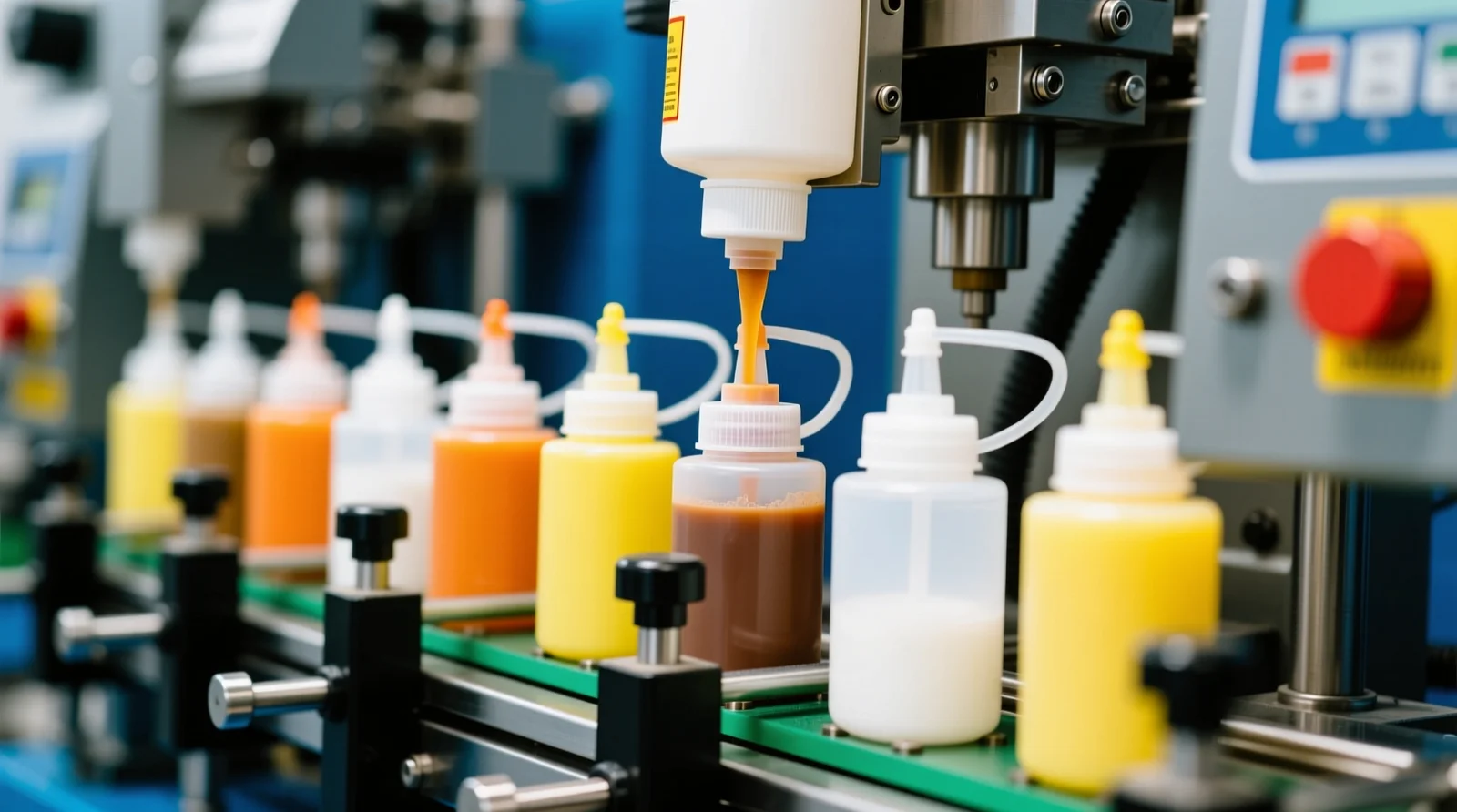
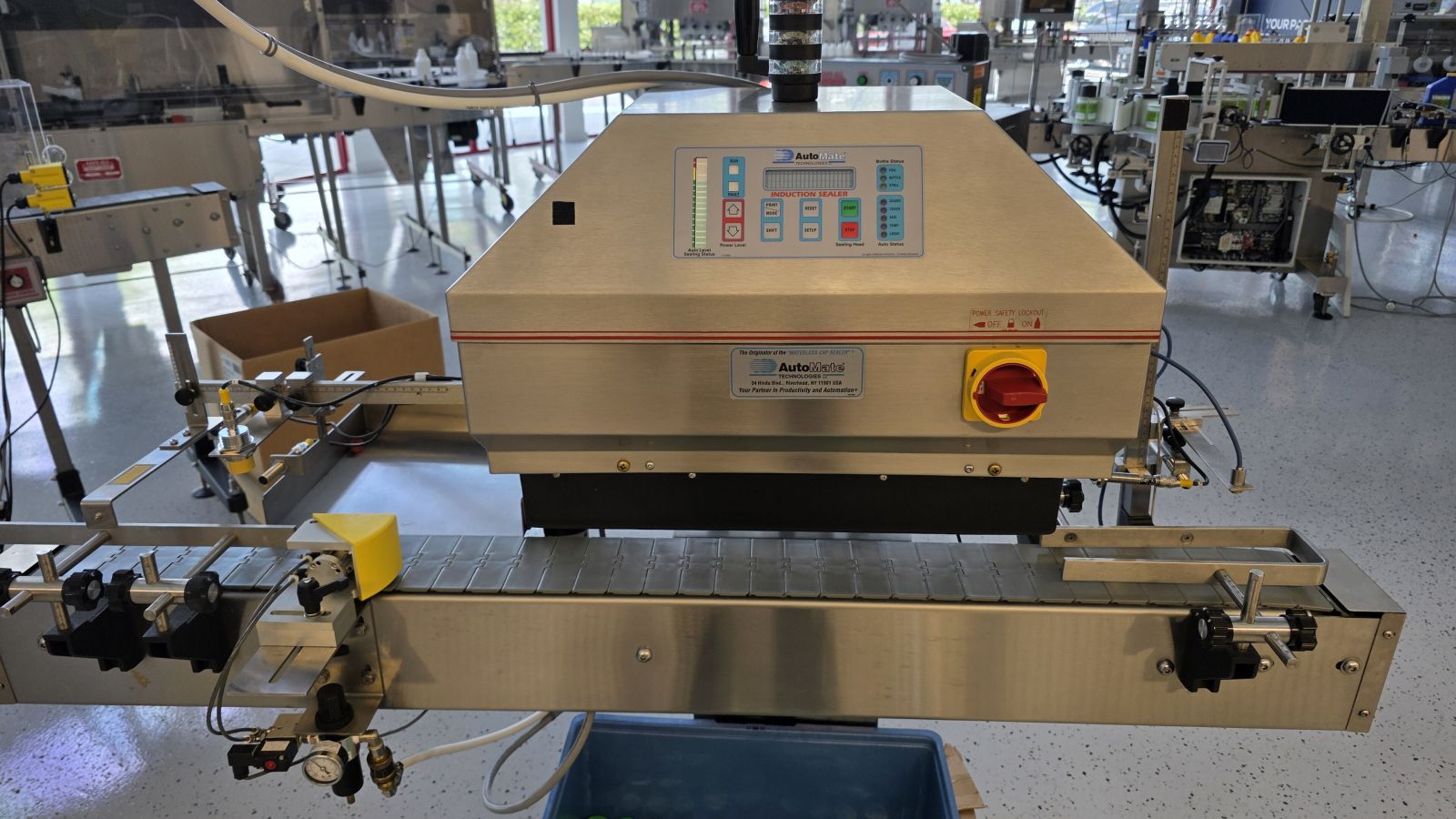
Last updated: September 8, 2026. Induction sealing is the closest thing packaging has to welding a cap shut from the outside: a coil under the conveyor generates a magnetic field that heats a foil liner inside the already-applied cap, bonding it to the container lip. No contact, no adhesive, no additional consumable beyond the liner — and the result is a hermetic, tamper-evident closure.
The core idea of this page: induction sealing is an invisible weld driven by eddy currents in the foil liner — and it fails predictably when four line variables (power, gap, speed and torque) drift. If you know the liner structure and those four variables, every induction-seal problem has a diagnosable cause.
The physics in one paragraph
An alternating current in the sealing head’s coil creates an alternating magnetic field. The field passes through the container wall and cap into the foil liner, where it induces eddy currents. The foil’s electrical resistance turns those currents into heat — the same principle as an induction hob. The heated foil melts the polymer coating on the liner’s underside, which bonds to the container lip as it cools. The cap can be torqued before or after sealing depending on the line layout.
The liner structure
A standard induction liner is a multi-layer disc inside the cap — equipment makers document the structure in their reference manuals:
- Backing layer (pulp or foam board): provides the wad’s body and stays in the cap.
- Wax or release layer: releases the foil from the backing when heated.
- Aluminium foil: the heating element — the layer the magnetic field acts on.
- Heat-seal polymer coating: melts and bonds to the container lip, forming the seal.
After sealing, the consumer removes the cap and peels away the foil — the visible proof the container was sealed. Liner choice must match the container material: the heat-seal coating has to bond to the container polymer, and it must also tolerate the product’s chemistry — oils and surfactants are the common bond-breakers.
The four line variables that decide seal quality
- Head power and gap: the sealing head is sized to the line, and the coil-to-cap distance sets field strength at the liner — too wide and the liner never reaches bonding temperature, too close risks melting the cap itself.
- Conveyor speed: dwell time under the head must match the power setting — speed and power are tuned together, and an untested speed increase is the classic cause of suddenly unsealed bottles.
- Cap torque: the cap must press the liner against the lip during bonding; under-torqued caps give partial, crescent-shaped seals — the most common induction-seal defect.
- Headspace and fill level: product too close to the lip can contaminate the bond surface; foaming or splashing product is the usual cause of leaky induction seals on liquid lines.
The benchmark machine is the Enercon Super Seal Max; the technology comparison is in Heat Sealing vs Induction Sealing; the machine-class map is in What Is a Sealing Machine.
Last verified: September 8, 2026.