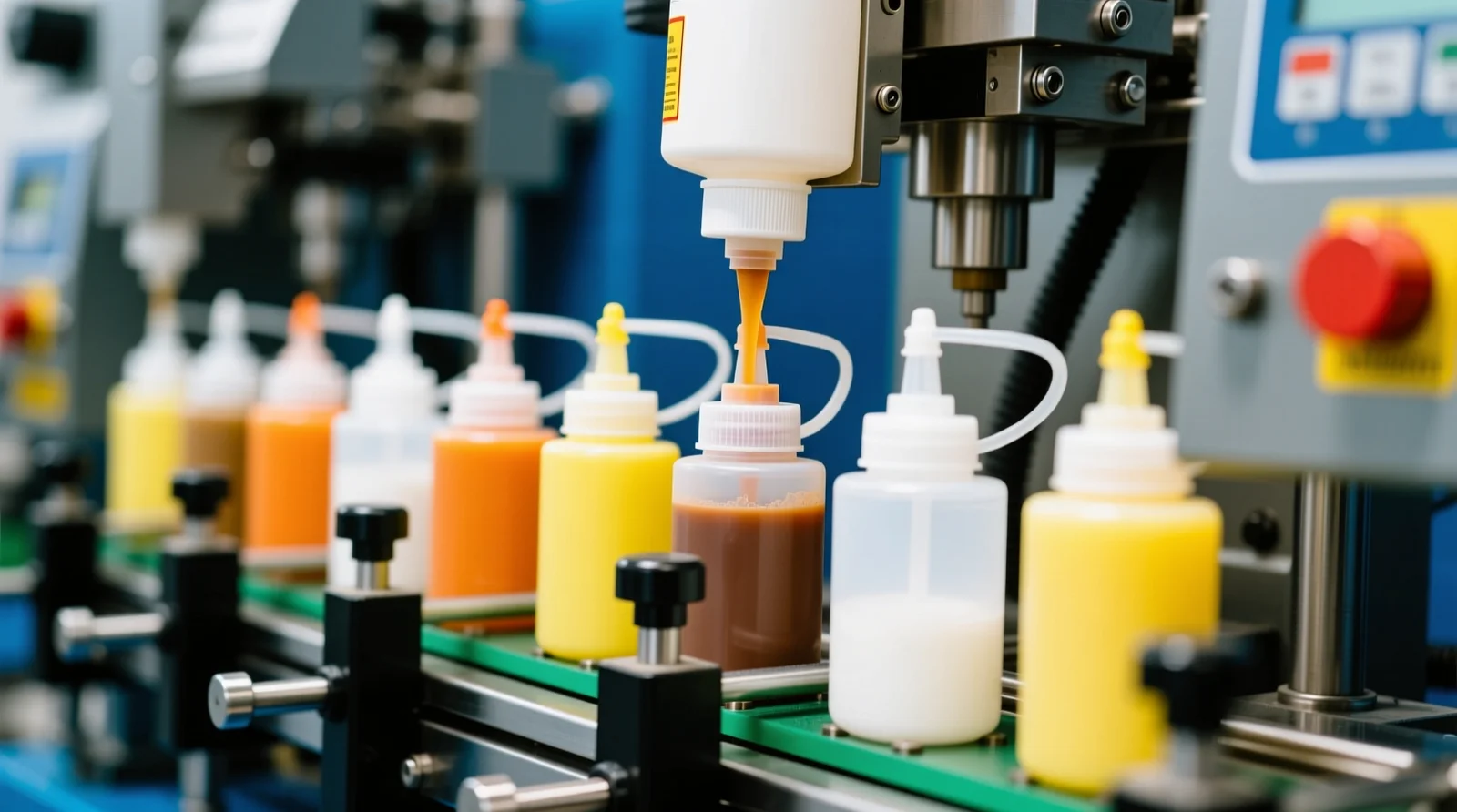
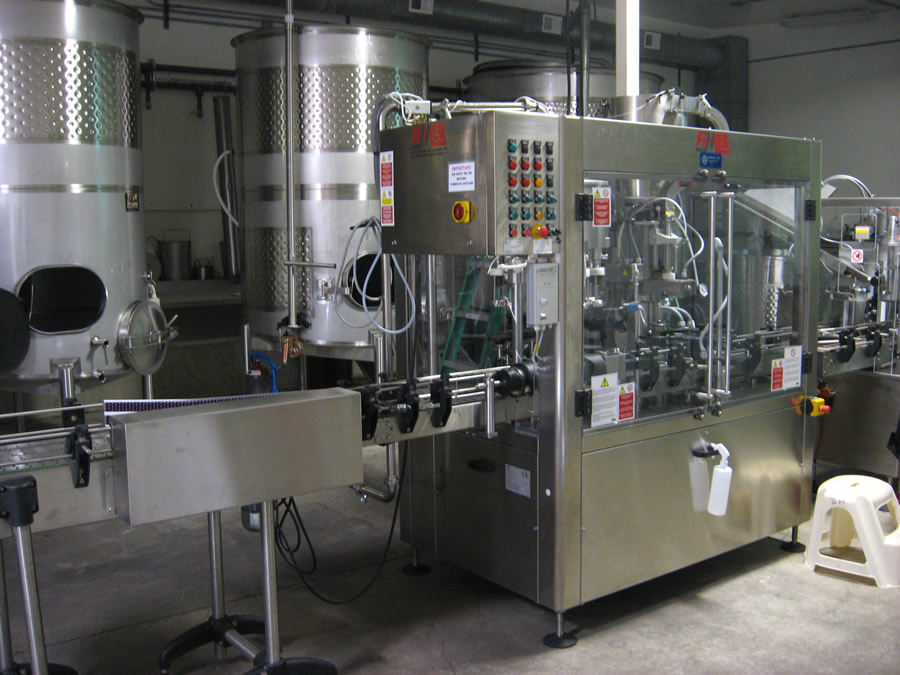
Selecting the correct liquid filling machine is not a matter of budget—it is a matter of physics. Applying the wrong filling principle to your product can result in foaming, inaccurate fill weights, blown seals, or catastrophic machine failure.
In the packaging machinery sector, the "Big Three" filling principles dominate most automated production lines: Piston Filling, Gravity Filling, and Overflow Filling. This guide breaks down the engineering mechanics, ideal viscosity ranges, and specific industry applications for each technology.
1. Piston Filling (Volumetric)
Piston fillers operate on a simple volumetric principle, much like a medical syringe. A precisely machined piston draws a specific volume of product from a hopper into a cylinder, and on the reverse stroke, forces that exact volume through a nozzle into the container.
Best For:
High Viscosity & Particulates. Products like peanut butter, honey, heavy lotions, tomato paste, and chunky salsas.
Pros & Cons
- Pro: Ultimate Versatility. Can handle everything from water-thin liquids to thick pastes.
- Pro: High Accuracy. Modern servo-driven pistons (as opposed to cheap pneumatic cylinders) offer about ±0.5% volumetric accuracy.
- Con: Wear and Tear. Abrasive products can wear out the piston seals (O-rings) and cylinder walls. As noted in our Top 10 Manufacturers Guide, cheap machines often suffer from cylinder scoring, leading to accuracy drift and dripping.
2. Gravity & Time-Pressure Filling
Gravity fillers rely on the earth's gravity to pull liquids from an elevated tank through the filling valves. The amount of liquid dispensed is determined by the time the valve remains open. For slightly thicker liquids, a pump provides constant pressure (Time-Pressure filling) rather than relying solely on gravity.
Best For:
Low Viscosity & Free-Flowing Liquids. Water, juices, wine, liquid fertilizers, and clear chemicals.
Pros & Cons
- Pro: Cost-Effective. Gravity fillers have the simplest mechanical design, making them the most affordable and easiest to maintain.
- Pro: High Speed. Excellent for large-scale, continuous flow operations (like rotary water bottling lines).
- Con: Viscosity Limits. Entirely unsuitable for thick products. Temperature changes that alter product viscosity will dramatically skew fill volumes unless compensated by dynamic flow meters.
3. Overflow Filling (Fill-to-Level)
Unlike Piston or Gravity fillers which measure by volume, Overflow fillers measure by level. The nozzle dives into the bottle and forms a seal. Product is pumped in until it reaches the target height. Any excess product (overflow) is forced up a return tube back into the main holding tank. This ensures every single bottle appears filled to the exact same line, regardless of microscopic variations in the glass or plastic wall thickness.
Best For:
Foamy Liquids & Clear Containers. Glass cleaners, shampoos, liquid soaps, and cosmetics presented in transparent retail packaging.
Pros & Cons
- Pro: Aesthetic Perfection. Guarantees a uniform fill line across the retail shelf, crucial for brand image in clear bottles.
- Pro: Bubble Elimination. The overflow mechanism naturally flushes out foam, making it the only choice for highly sudsy chemicals.
- Con: Not for Expensive Liquids. Because the product is constantly recirculated, it is not ideal for highly sensitive or ultra-expensive pharmaceuticals where cross-contamination or aeration is a risk.
Viscosity & Application Decision Matrix
Use this quick-reference matrix to determine your required technology baseline before engaging with suppliers:
| Product Type | Viscosity (typical) | Recommended Principle |
|---|---|---|
| Water, Spirits, Clear Juice | very low (water-like) | Gravity |
| Shampoo, Hand Soap, Glass Cleaner | low to medium (shampoo) | Overflow (To control foam) |
| Honey, Peanut Butter, Lotions | high (honey, paste) | Piston |
Source
Title: V-8-E Volumetric Piston Filler — Kaps-All
URL: https://kapsall.com/solutions/liquid-fillers/v-8-e-volumetric-piston-filler
Kaps-All specifies its servo volumetric piston filler at ±0.5% accuracy. This is a vendor specification, not an industry standard — confirm on your product.
Procurement Next Step: Now that you understand the underlying physics required for your product, you are ready to evaluate manufacturers. Read our 2026 Rankings & Cost Analysis of the Top 10 Liquid Filling Machine Manufacturers to build your vendor shortlist.